August 27, 2026 | 9AM UTC | 4 PM Bangkok | 5PM Manila | 2:30PM New Delhi | 10AM Nigeria
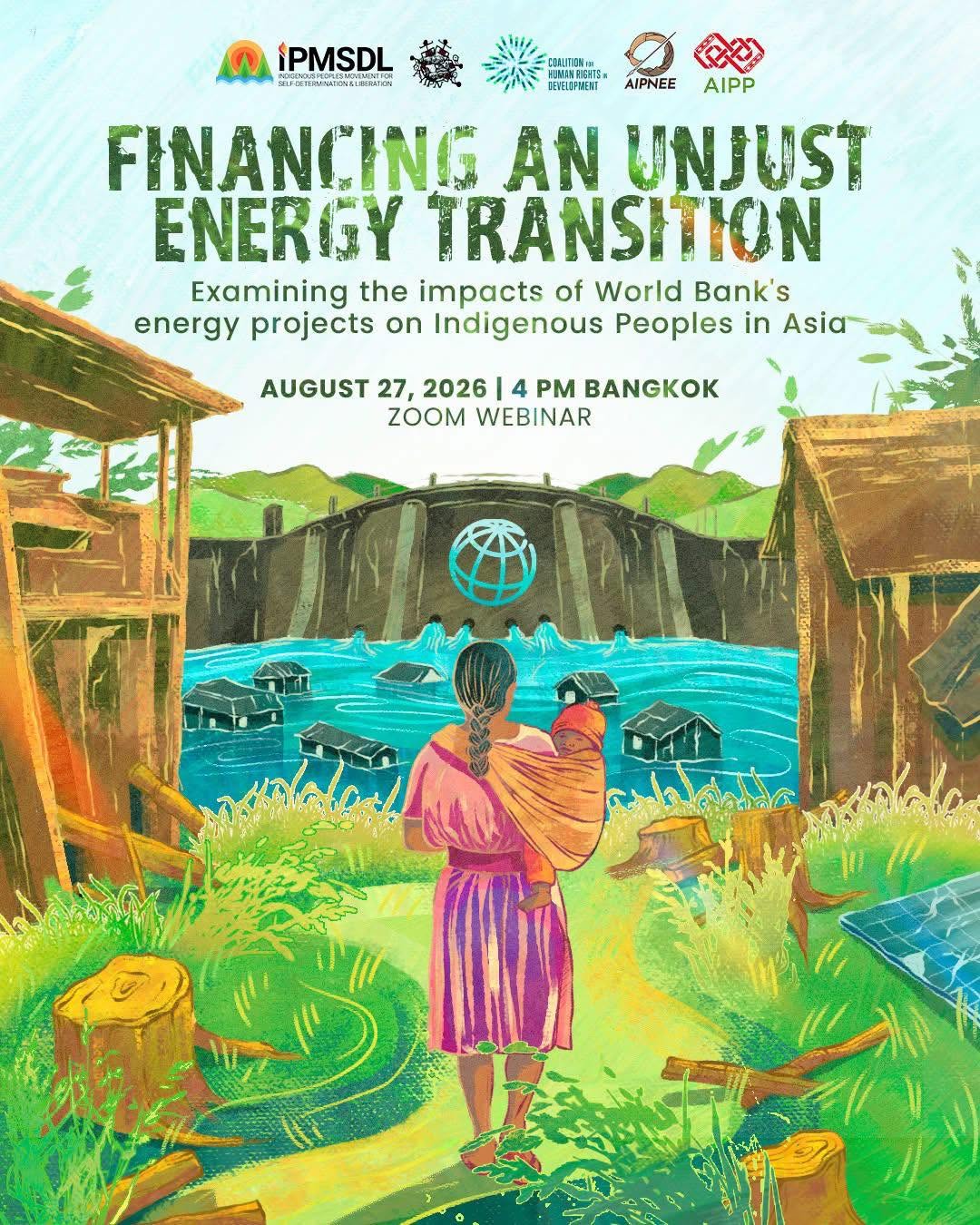
The rush towards renewable energy systems have resulted in the promotion and support for false solutions and extractivist activities. As energy and mineral resources are often found in Indigenous Peoples’ land, they bear the brunt of the energy transition. There are instances where projects are imposed without free, prior and informed consent (FPIC) or meaningful consultations, which are harming communities instead of meeting their priorities and needs. Indigenous human rights defenders are also targeted for raising alarm around these projects.
Development finance plays a crucial role in mobilizing resources and support for energy projects, with one of the major financiers in Asia being the World Bank. Indigenous communities from across Asia are resisting World Bank-financed critical minerals, hydropower and geothermal projects that are taking their land, rights and culture.
As the World Bank Annual Meeting will be convening in Bangkok, Thailand in October, the webinar will serve to highlight the key issues and demands of Indigenous Peoples concerning the role of the bank in the energy transition and upholding human rights. The webinar will also discuss Indigenous-led solutions that can serve as pathways for just transition with respect for human rights and protection of the environment.
This webinar is co-organized by the Asia Indigenous Peoples Pact, Asia Indigenous Peoples Network on Extractive Industries and Energy, Asia Young Indigenous Peoples Network, Coalition for Human Rights in Development and International Indigenous Peoples Movement for Self-Determination and Liberation.
Register here: https://bit.ly/FinancingUnjustEnergyTransition
(If you need interpretation, please fill up the registration form by August 18 so we can make the necessary arrangements.)